
Smile gently, without stretching your mouth, and check how much of your upper teeth show. If barely any appear, the skin between your nose and upper lip, the philtrum, has likely grown longer with age, pulling the lip inward and lower on the face. The mouth can look tired even when everything else has held up well. Dr. Matthew D. Brace, MSc, MD, FRCS(C), double-board-certified facial plastic surgeon and Medical Director of Guelph Facial Plastics, sees this often in patients whose smile looks different, though nothing specific seems to have changed.
In this blog, learn why the philtrum lengthens and what Guelph Facial Plastics offers, surgical and non-surgical, to restore a shorter upper lip.
What a Longer Philtrum Does to the Lower Face
The philtrum is the groove between the base of the nose and the edge of the upper lip. On a youthful face, it's short enough that a few millimetres of tooth show peek through at rest. As skin loses collagen with age, the philtrum lengthens, the lip loses its upward curl and thins, and the lower face reads as heavier and older, no matter how firm the jawline or cheeks remain. Dermatology research on aging skin points to this gradual collagen breakdown as the underlying driver. Most people notice the shift in photos long before they can name the cause.
Signs the Philtrum Has Already Lengthened
A few visual cues tend to show up together once this pattern sets in:
- Little to no upper tooth show when the mouth is relaxed
- A thinner-looking upper lip that used to appear fuller
- Fine vertical lines across the upper lip skin
- A heavier upper lip after years of repeated dermal filler
- Noticeable asymmetry between the left and right side of the lip
Any one of these alone may be minor. Together, they usually point to the same cause.
Restoring a Shorter Philtrum: The Lip Lift
A lip lift is the only procedure that directly shortens the philtrum instead of adding volume to the lip. Dr. Brace removes a thin strip of skin at the base of the nose and uses dissolvable sutures to lift and secure the lip, typically in-office under local anesthetic in 30 to 45 minutes. Every lip lift is planned individually, not fit to a template: incision placement and the degree of lift depend on each patient's anatomy, which is why Dr. Brace measures and photographs the lip at consultation first.
Non-Surgical Options to Consider First
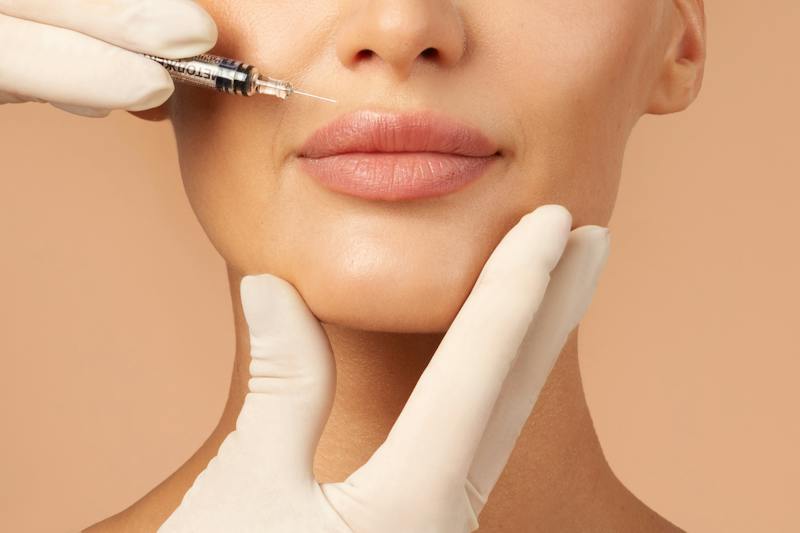
Patients who want to test the look before committing to surgery have a few non-surgical paths. Hyaluronic acid dermal fillers add subtle volume, though they don't shorten the philtrum, and results fade after several months. A small amount of BOTOX along the upper lip border, known as a lip flip, can relax the muscle enough to let the lip roll gently outward for a fuller look without added volume. Both are done in-office by the clinical team, require no downtime, and typically last three to four months.
Why Patients Travel to Guelph for Their Lip Lift
Dr. Brace performs 10 to 20 lip lifts a year, a regular part of his caseload rather than an occasional add-on. Because the incision sits at the center of the face, he pairs precise closure with laser treatments during recovery to refine the scar as it heals. Milton and Kitchener patients are a short 30-minute drive away, and those from Toronto and the GTA make the trip regularly.
Restoring Balance to the Lower Face With Dr. Matthew D. Brace, MSc, MD, FRCS(C)
An elongated philtrum is one of the most overlooked signs of aging in the lower face. It changes how open a smile looks long before anything else does. Understanding the cause comes first, before deciding between a surgical lip lift and a non-surgical option like filler or BOTOX. Schedule a consultation with Guelph Facial Plastics to find the option that fits your anatomy and goals.
This information is provided for educational purposes only and does not replace a consultation with a board-certified facial plastic surgeon. Outcomes, risks, and suitability vary from patient to patient.